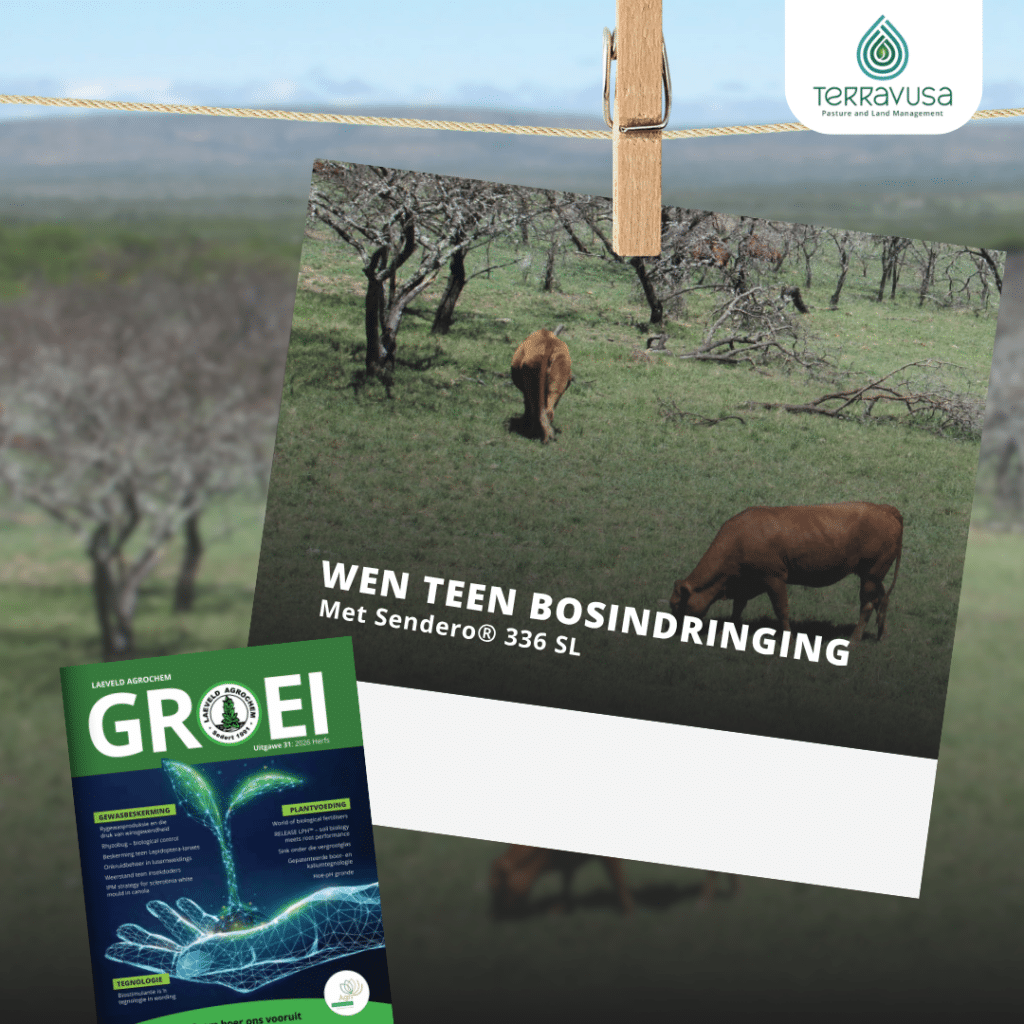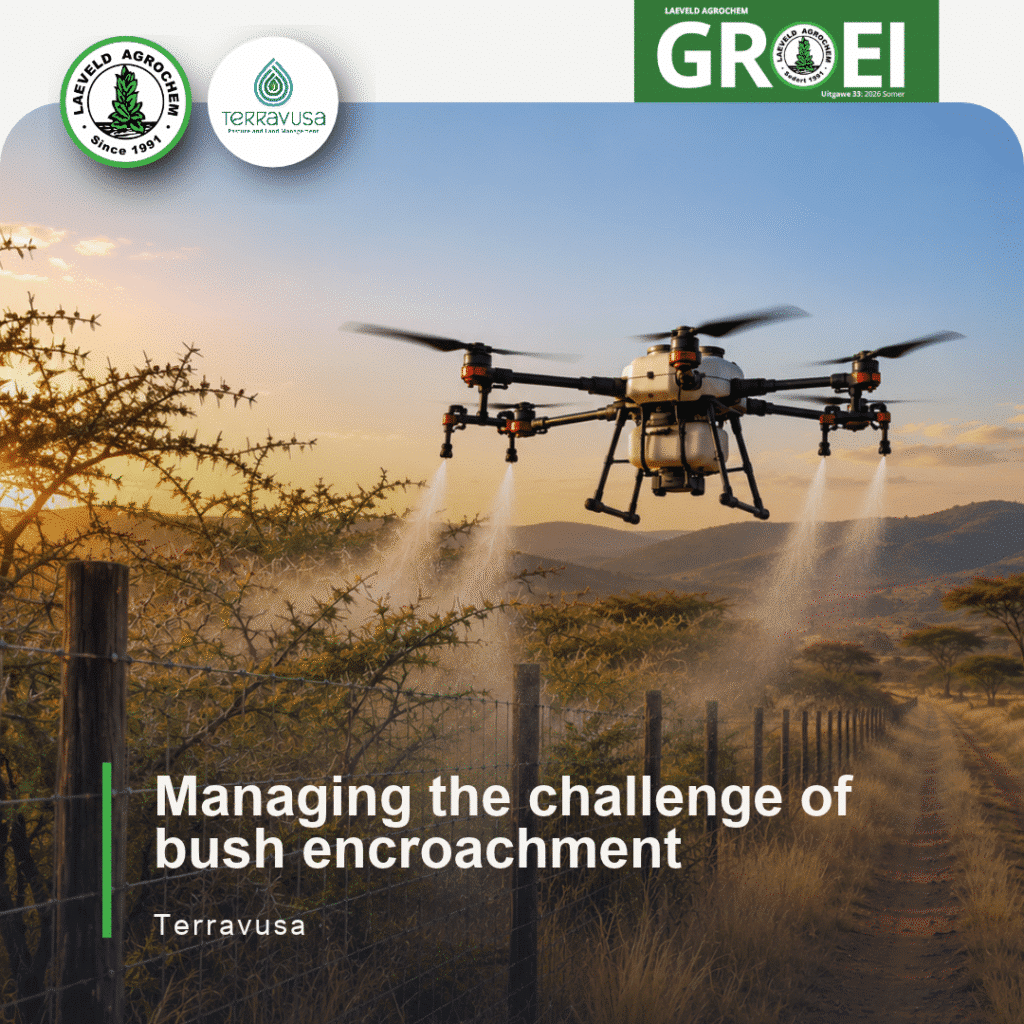
Bush encroachment and invasive plant species remain a significant challenge for landowners across Southern Africa. Left unmanaged, these plants can reduce grazing capacity, impact biodiversity and place increasing pressure on valuable agricultural land.
Effective vegetation management requires more than simply applying a product. Accurate identification, careful planning, correct application and ongoing follow-up are important to achieving lasting results. This is where Terravusa provides a complete, practical solution.
Established to address the need for expert technical support and on-the-ground solutions, Terravusa specialises in managing indigenous bush encroachment and invasive alien plant species. The company combines specialised products, technical expertise and practical services to help landowners manage vegetation challenges effectively.
Terravusa works with landowners, farm or project managers to develop site-specific vegetation management strategies. Every property presents different challenges, with terrain, vegetation density, species composition, accessibility and land-use objectives influencing the most appropriate control strategy. Terravusa then provides tailored recommendations and planning support.
Leading solutions
Terravusa is the exclusive distributor of selected products from Corteva Agriscience and other strategic supply partners, providing access to industry-leading vegetation management solutions backed by global research and innovation. These products are combined with local technical knowledge to provide recommendations suited to Southern African conditions.
Local support, regional reach
Terravusa established a network of carefully selected and extensively trained distributors strategically positioned throughout Southern Africa. This provides professional guidance and reliable service close to where clients operate, while maintaining consistent technical standards.
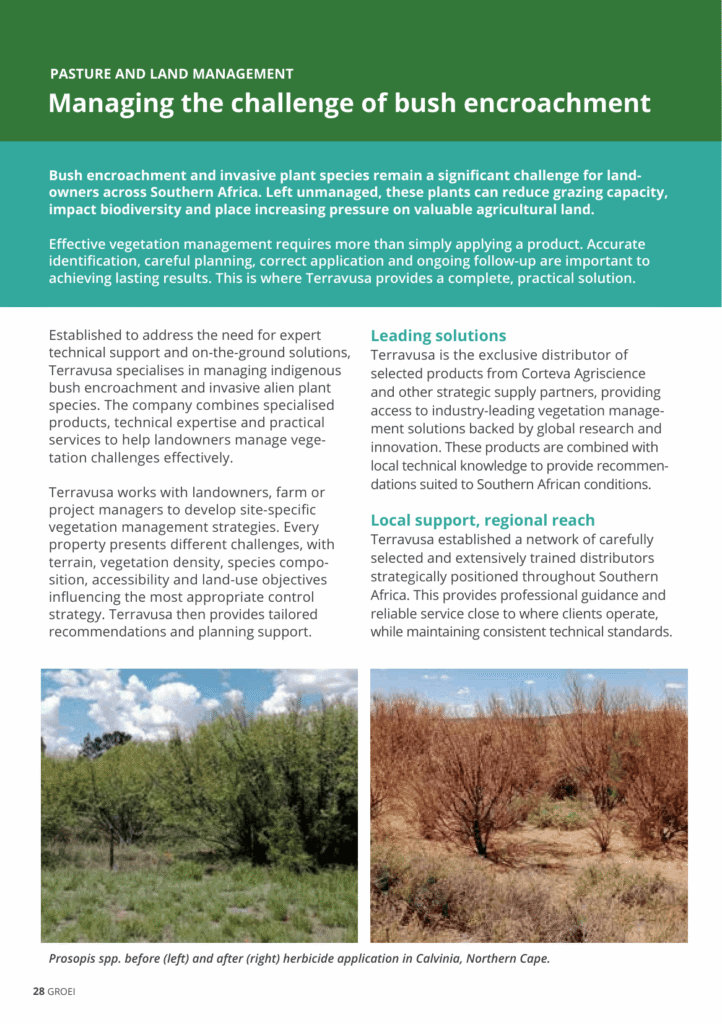
Prosopis spp. before (left) and after (right) herbicide application in Calvinia, Northern Cape.
Services and offerings
A key strength of Terravusa is its ability to support clients throughout the complete process.
Site assessments: On-farm and site visits determine the extent of bush encroachment or invasive plant infestations and identify the client’s specific requirements.
Planning: Terravusa assists with developing a practical strategy and determining the appropriate next steps.
Application support: Where required, Terravusa connects landowners with experienced aerial applicators and ground-application teams and assists with application planning to help ensure treatments are carried out correctly.
Post-application monitoring: Monitoring can be provided to assess treatment results and identify any further management requirements.
Three-year follow-up planning: Because effective vegetation management is an ongoing process, Terravusa provides guidance on follow-up actions to maintain results and manage regrowth or reinfestation.
Free product training: Training is available to help clients and application teams understand products and their correct use.
Solutions for indigenous encroacher and invasive alien plant species
Indigenous encroacher plant species include:
- Sicklebush (Dichrostachys cinerea),
- Sweet Thorn (Vachellia karroo),
- Black Thorn (Senegalia mellifera),
- Mopane (Colophospermum mopane),
- Bankrupt Bush (Seriphium plumosum),
- Vaalboom (Terminalia sericea),
- Driedoring (Rhigozum trichotomum)
- Vaalbos (Tarchonanthus camphoratus).
Invasive plant species include:
- Prosopis spp. (Honey mesquite & several hybrid species)
- Lantana (Lantana camara)
- Siam Weed (Chromolaena odorata)
- Demonia Weed (Parthenium hysterophorus)
- Opuntia spp. (O. ficus-indica, O. aurantiaca etc.)
Because different plant species and conditions require different approaches, correct identification and appropriate treatment planning are essential.
A long-term partner for land and pasture management
Effective bush control is not simply about removing unwanted vegetation. Long-term success depends on choosing the right strategy, applying solutions correctly and following up to manage regrowth and reinfestation.
With access to leading products, technical expertise, trained distributors and practical field support, Terravusa offers landowners a comprehensive approach to bush encroachment and invasive plant management.
For more information or to book a farm visit, please contact: Stephan Jooste 072 275 7160 stephan@terravusa.com
www.terravusa.com
From sicklebush and bankrupt bush to Prosopis and lantana, explore the plants threatening your grazing land. Choose a plant to see visual identification clues, its relevance to grazing land and further reading.
Indigenous encroachers and invasive alien plants are grouped separately; vegetation density, location and land-use goals all matter.
Showing 6 of 13 plantsIdentification is only a starting point. The photos are examples, not a definitive identification tool. Indigenous woody plants can also provide habitat and browse, while Prosopis and Opuntia include multiple species or hybrids. Confirm the species and seek advice before choosing any control measure.
Photograph credits and licences
- Sicklebush: photo by Franz Xaver · CC BY-SA 4.0
- Prosopis / mesquite: photo by sonnia hill · CC BY 2.0
- Bankrupt bush: photo by SAplants · CC BY-SA 4.0
- Lantana: photo by Dinkum · CC0 1.0
- Sweet thorn: photo by SAplants · CC BY-SA 4.0
- Black thorn: photo by Tim Brunauer / GIZ · CC BY-SA 4.0
- Mopane: photo by Lidine Mia · CC BY-SA 4.0
- Vaalboom: photo by SAplants · CC BY-SA 4.0
- Driedoring: photo by Bernard DUPONT · CC BY-SA 2.0
- Vaalbos / camphor bush: photo by SAplants · CC BY-SA 4.0
- Siam weed: photo by Edeh Sophia · CC0 1.0
- Demonia weed: photo by Ethel Aardvark · CC BY 3.0
- Prickly pear / Opuntia: photo by PDS.2016 · CC BY-SA 4.0
Photographs are cropped to fit the gallery layout.

Controlling encroaching woody plants is an important first step, but restoring productive grazing takes more than a single treatment. Grass recovery, appropriate grazing management and follow-up all contribute to longer-term results.
See the difference after bush control
Prosopis spp. / Calvinia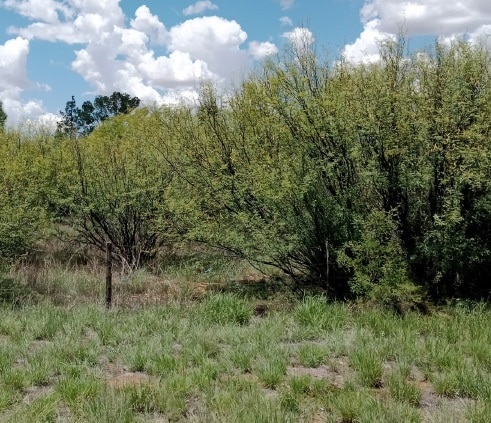 Before treatment
 After application
Photographs: Prosopis spp. before and after herbicide application in Calvinia, Northern Cape.
Control is not the same as recovery. These photographs show a response to treatment, not a measured increase in grass cover or livestock carrying capacity. The next steps depend on conditions on the property.
What happens after bush control?
Explore the three connected stages of managing vegetation for healthier, more productive veld.
Reduce unwanted woody competition
Start with accurate plant identification and a site-specific control plan. The aim is to manage problematic encroachers while considering useful vegetation, soil conditions, terrain and the property's grazing objectives.
Give desirable grasses room to recover
With less woody competition, the grass layer may improve where rainfall, soils and existing vegetation allow it. Avoid assuming grazing capacity has already increased: monitor the veld's response and adjust grazing pressure to its actual condition.
Maintain the gains and manage regrowth
Woody plants can regenerate or reinvade. Regular monitoring, practical grazing decisions and planned follow-up help protect the results. Terravusa's article specifically emphasises three-year follow-up planning.
Four useful signs to monitor
Are desirable perennial grasses increasing?
Is exposed soil decreasing or becoming more stable?
Are seedlings or resprouting plants returning?
Does livestock use match the veld's condition?
Questions farmers often ask
Will grass automatically return after bush control?
Not necessarily. Reducing woody competition can help, but the response depends on rainfall, soil condition, the remaining grass seed or plants, and grazing pressure. Track recovery rather than assuming it will happen immediately.
When can a farm support more livestock?
There is no fixed timeframe that applies to every property. Increased stocking should follow an assessment of available forage, veld condition and seasonal variability, rather than the appearance of treated bushes alone.
Why keep monitoring after the treatment?
Encroaching plants may regrow, new seedlings can establish and grazing pressure can affect recovering grasses. Repeat photographs and scheduled field checks help reveal whether additional management is needed. Terravusa offers guidance on a three-year follow-up plan.
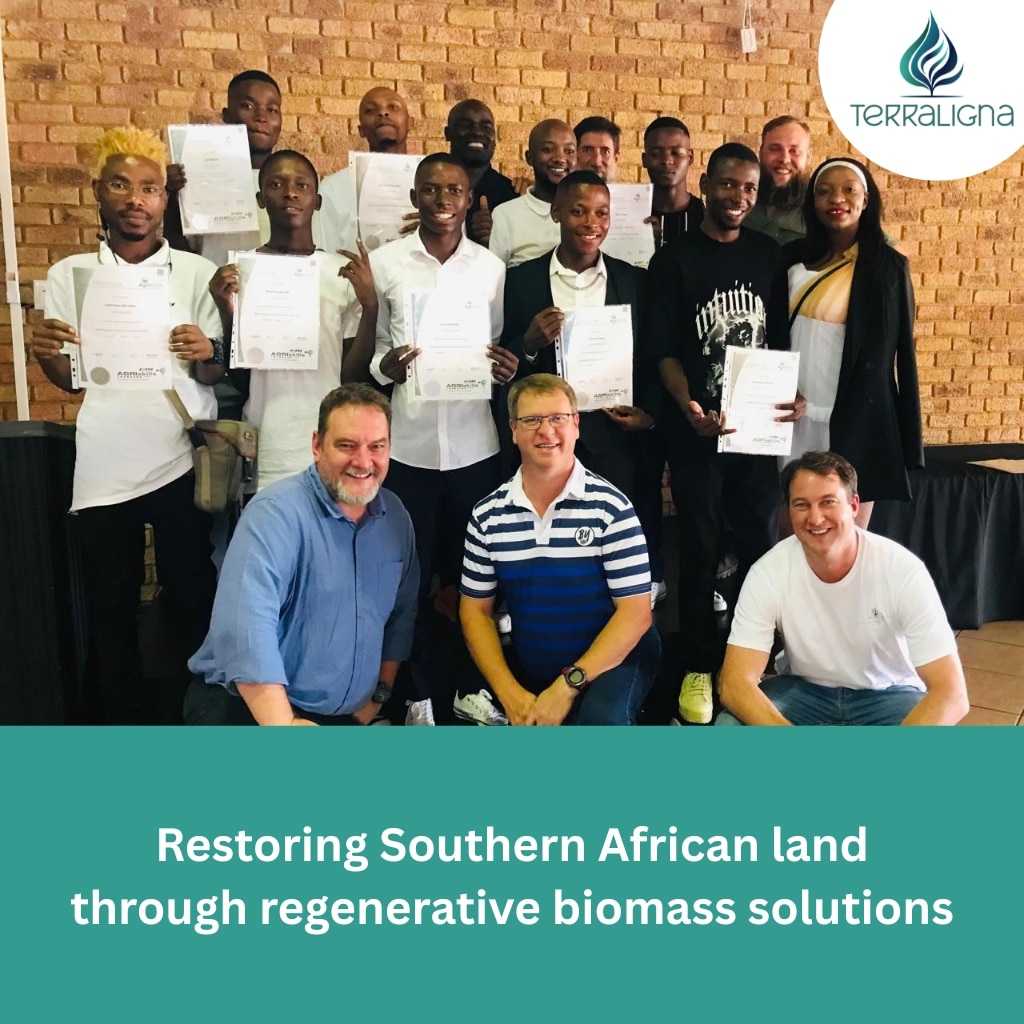
Explore why recovering grazing capacity matters, and how Terravusa and Terraligna are contributing to land-restoration efforts.