Optimise your citrus yield
The hidden season of success – why flower induction defines citrus yields (Agri Technovation)
Long before spring bloom is visible, citrus trees are already deciding the size and quality of the next crop. The crucial March-to-June induction window is where carbohydrate reserves, shoot quality and precise mineral nutrition quietly shape flowering intensity, fruit set and yield potential. Get that period wrong, and no later correction can fully recover the loss. Get it right, and the foundation for a strong, uniform bloom is already in place. With outdated sampling, misleading leaf data and hidden nutrient gaps still driving poor decisions, the real advantage belongs to growers who understand what the tree needs before the flowers ever appear.
Understanding fertiliser for better results
World of biological fertilisers – Incite® ST, MicroPhos® Grains and Criss Cross™(MBFi)
Healthy crops start below the surface, where roots, microbes and nutrient dynamics shape everything that follows. A new generation of biological fertilisers is showing how targeted bacteria and mycorrhizal fungi can do far more than simply support growth: they can unlock tied-up nutrients, stimulate root development, improve fertiliser efficiency and help crops handle stress with greater resilience. From stronger early vigour in maize and soybeans to better phosphorus uptake and expanded root architecture across a wide range of crops, the results point to a powerful shift in how productivity can be built.
More articles on plant nutrition
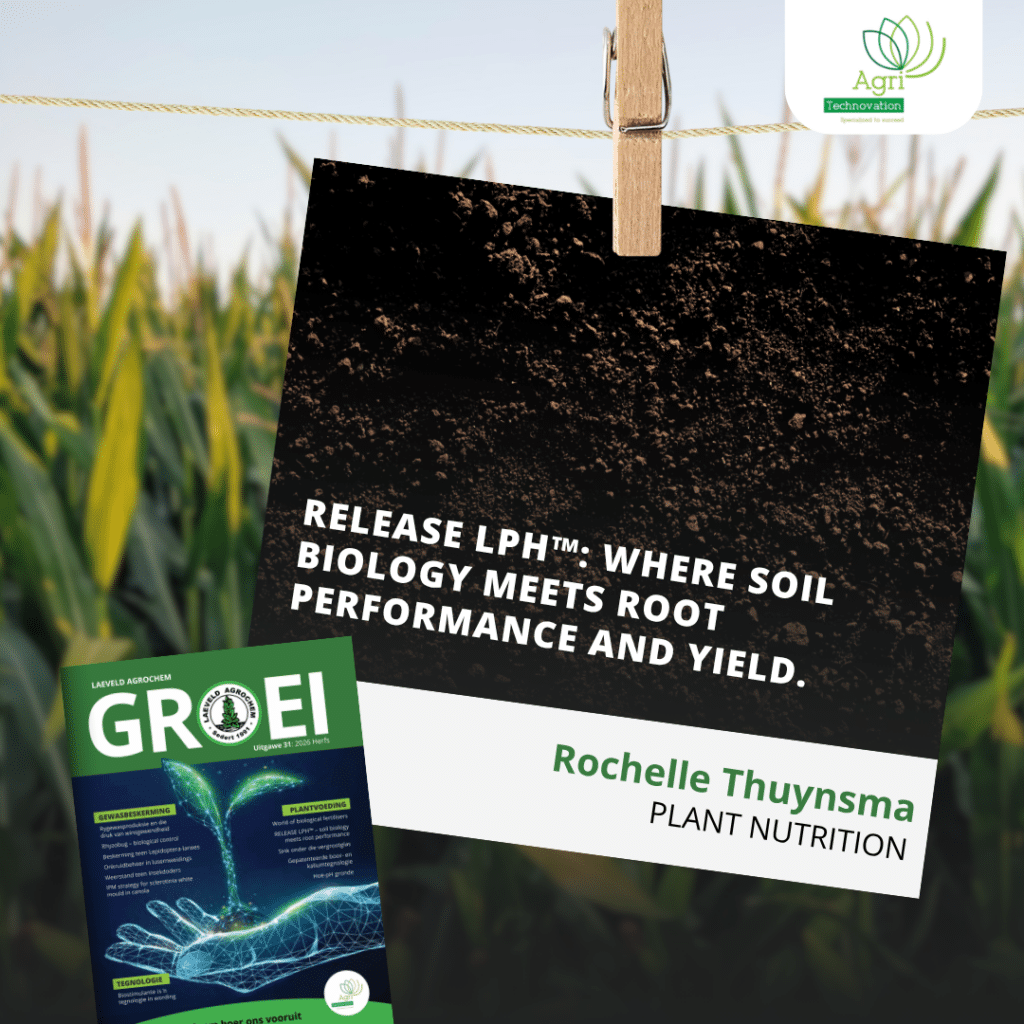
RELEASE LPH™: Where soil biology meets root performance and yield (Agri Technovation)
Healthy soils do far more than anchor roots. They drive the biological activity that shapes nutrient release, root architecture and ultimately yield. RELEASE LPH™ taps into that hidden engine by stimulating native soil microbes and improving the rhizosphere environment, helping crops build stronger root systems and explore more soil for water and nutrients. Trial results across grapes, citrus, cherries and walnuts point to gains in root coverage, microbial activity, fruit size and marketable yield.